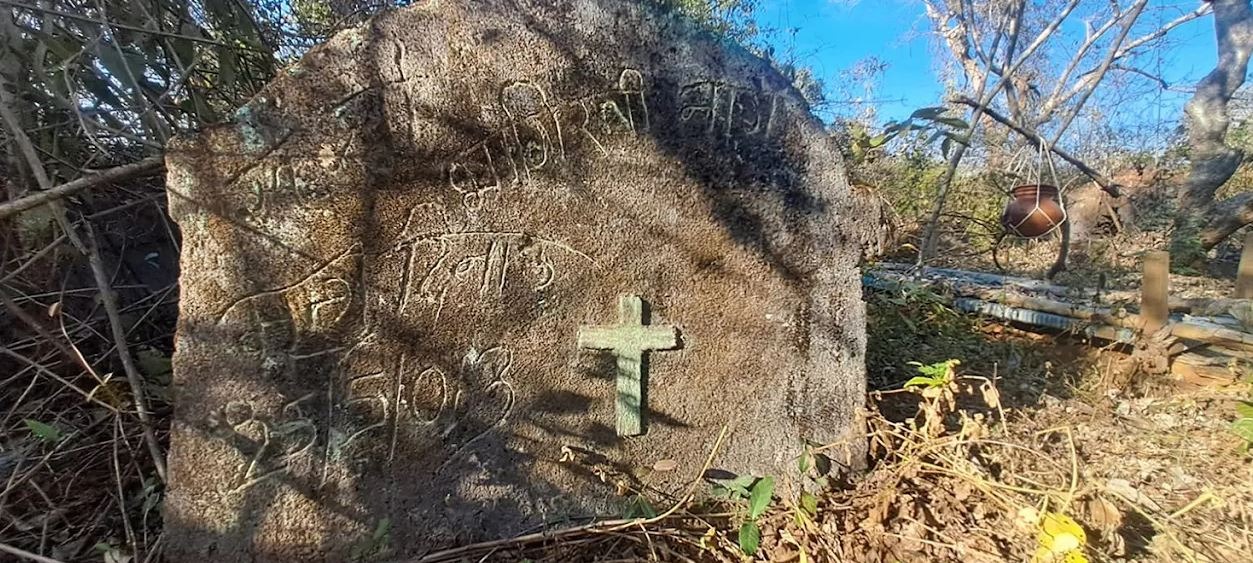
Faith Under Fire: Anti-Christian Violence in Bastar
Overview
A recent Supreme Court judgment on burial rights in Chhattisgarh has once again drawn attention to escalating violence and discrimination faced by Christian Adivasis in the state’s Bastar region. The case, involving the denied burial of a Dalit Christian pastor, highlights deeper issues surrounding religious freedom, tribal identity, and political mobilisation in central India.
This article examines recent incidents, historical roots of anti-Christian tensions, and the broader implications for constitutional protections and minority rights.
Supreme Court Ruling on Burial Rights
On 27 January, the Supreme Court delivered its judgment in a case concerning the burial of Subhash Bhagel, a Dalit Christian pastor from Bastar district. After villagers allegedly prevented his burial in his native village, his son Ramesh Bhagel approached the courts seeking justice.
Both the Chhattisgarh High Court and the Supreme Court ruled that the burial must take place in a designated Christian graveyard located over 20 kilometres away from the family’s village.
While legally resolving the dispute, the judgment has sparked debate about equal access to public burial grounds and the constitutional guarantees of dignity and religious freedom under Articles 21 and 25 of the Indian Constitution.
Pattern of Burial Denials and Exhumations
The Bhagel case is not isolated. Several similar incidents have been reported across Bastar:
- In October 2022, the body of Dulari Padda, a Christian Adivasi woman in Kondagaon district, was allegedly exhumed by villagers.
- In November 2022, Chaitibai, an Adivasi woman from Kurutola village in Kanker district, was reportedly exhumed after burial.
- Reports indicate the presence of local political and tribal leaders during some of these incidents.
These cases suggest a troubling pattern where religious identity becomes grounds for posthumous discrimination.
Rising Violence in Narayanpur and Kondagaon
Violence against Christian Adivasis intensified in late 2022 and early 2023:
- In January 2023, a church was vandalised in Narayanpur district amid allegations of religious conversion.
- In December 2022, Christian families from multiple villages alleged assault, social boycott, and forced eviction.
- A fact-finding committee reported that attacks in 33 villages across Narayanpur and Kondagaon districts displaced nearly a thousand Christian Adivasis within a single month.
Field observations from Bastar indicate that many conversions occurred among economically marginalised families. In several cases, conversion followed personal crises such as illness or death in the family, where communities reportedly failed to provide support. Churches often stepped in with social and emotional assistance, strengthening community bonds.
Historical Context: The Roots of Anti-Christian Mobilisation
Tensions between Christian missionaries and Hindu nationalist organisations in the region date back to the early 1950s.
The Rashtriya Swayamsevak Sangh (RSS) established its first Vanvasi Kalyan Ashram in Jashpur district, then a Christian-majority region. The Ashram aimed to counter missionary influence and promote cultural integration of tribal communities within a broader Hindu identity framework.
In 1954, the Congress-led Madhya Pradesh government formed the Christian Missionary Activities Enquiry Committee to investigate allegations of forced or fraudulent conversions. The committee’s findings acknowledged both missionary activity and efforts to reconvert Adivasis.
Over decades, religious conversion in tribal regions has remained politically sensitive, often framed as a cultural and ideological contest.
Religion, Identity and Tribal Politics
The Bastar region’s tribal communities historically practiced indigenous belief systems. Religious conversion—whether to Christianity or reconversion efforts by Hindu organisations—has often intersected with:
- Economic marginalisation
- Access to education and healthcare
- Political representation
- Land and identity rights
For many Adivasi families, conversion is experienced as a personal spiritual decision. For political actors, however, it frequently becomes a symbol of cultural contestation.
This tension intensifies in areas where tribal identity is mobilised as a political resource.
Constitutional Questions and Human Rights Concerns
India’s Constitution guarantees:
- Freedom of religion (Article 25)
- Equality before law (Article 14)
- Protection of life and dignity (Article 21)
When burial rights are denied or bodies are exhumed based on religious identity, it raises serious constitutional and human rights concerns.
Legal experts argue that access to common burial grounds should not depend on religious affiliation unless governed by clearly defined local regulations applied uniformly.
The Road Ahead
Addressing violence against Christian Adivasis requires:
- Strict enforcement of law against intimidation and mob action
- Transparent investigations into exhumation and displacement cases
- Dialogue between tribal leaders, civil society groups, and government officials
- Protection of constitutional rights irrespective of religious identity
Sustainable peace in Bastar will depend not only on court rulings but on rebuilding trust within communities fractured by religious and political tensions.
Conclusion
The recent burial dispute in Chhattisgarh is more than a legal case—it is a reflection of deep-rooted anxieties about faith, identity, and belonging in tribal India. As incidents of violence and social exclusion continue to surface, the question remains whether constitutional protections can effectively safeguard vulnerable communities on the ground.
Ensuring dignity in life—and in death—remains a fundamental test of India’s democratic commitments.
Post a comment